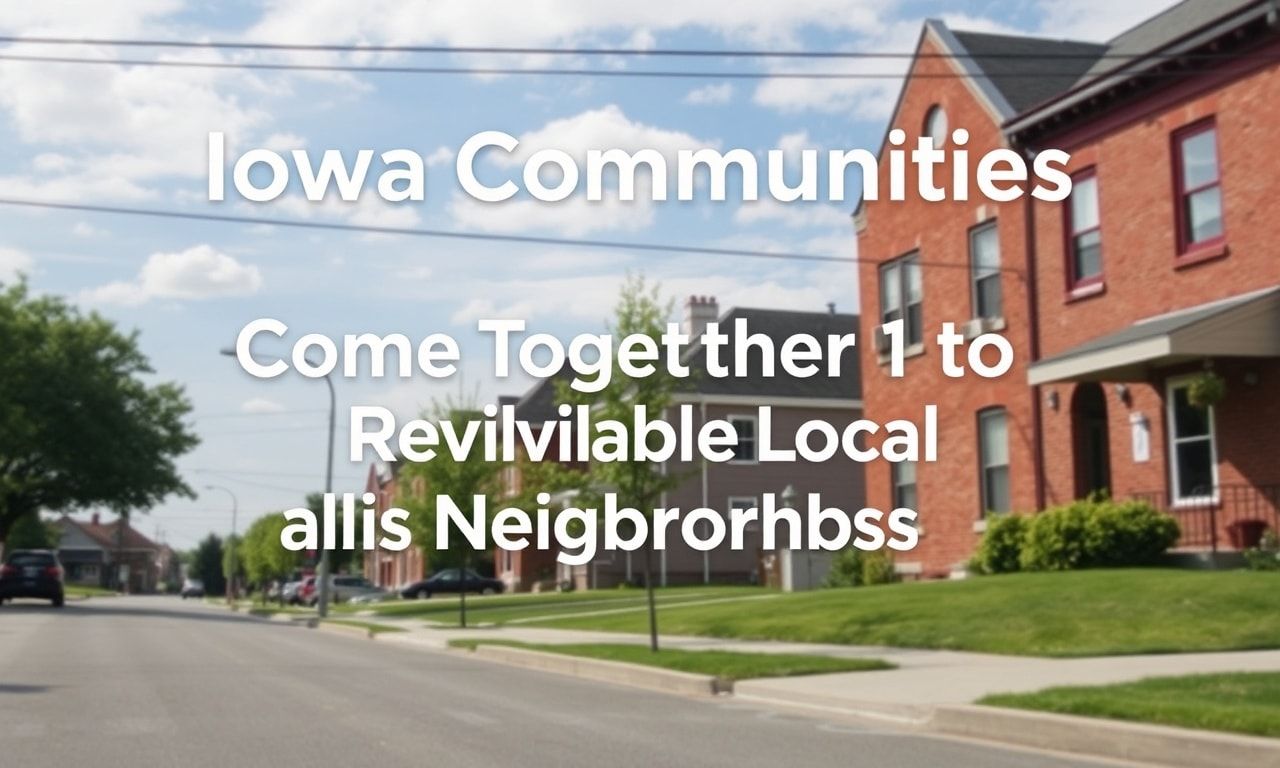
The Spirit of Community Revitalization
In a heartening display of community spirit, several towns across Iowa have embarked on ambitious neighborhood revitalization projects. These initiatives aim to enhance the quality of life for residents, attract new businesses, and foster a sense of pride and belonging. From urban centers to rural hamlets, Iowans are rolling up their sleeves to transform their communities, one project at a time.
Grassroots Efforts and Local Partnerships
The success of these revitalization efforts can be attributed to the collaborative efforts of local governments, non-profit organizations, and dedicated volunteers. In Des Moines, the ‘Neighborhoods First’ program has galvanized residents to participate in community clean-ups, tree-planting drives, and home improvement initiatives. Similarly, in Cedar Rapids, the ‘Revitalize CR’ campaign has brought together local businesses, schools, and community leaders to brainstorm and implement innovative solutions for urban renewal.
One of the key aspects of these projects is the emphasis on sustainable and budget-friendly solutions. Residents are encouraged to explore home improvement ideas budget tips to enhance their living spaces without breaking the bank. By focusing on cost-effective strategies, communities can achieve significant improvements with limited resources.
Notable Projects and Success Stories
Several communities have already seen remarkable transformations as a result of these revitalization efforts. In Davenport, the ‘Main Street Makeover’ project has breathed new life into the historic downtown area, attracting tourists and boosting local businesses. The initiative included the installation of public art, the creation of pedestrian-friendly spaces, and the restoration of historic buildings.
In smaller towns like Grinnell and Pella, community-driven projects have focused on enhancing public spaces and promoting local culture. Grinnell’s ‘Green Spaces Initiative’ has transformed underutilized lots into vibrant parks and gardens, while Pella’s ‘Heritage Trail’ project has created a scenic walking path that highlights the town’s rich Dutch heritage.
The Role of Technology and Innovation
Technology has played a crucial role in the success of these revitalization projects. Community leaders are leveraging social media platforms to engage residents, gather feedback, and share updates on ongoing projects. Additionally, innovative tools like 3D modeling and virtual reality are being used to visualize and plan community improvements, ensuring that every detail is carefully considered.
In Iowa City, the ‘Smart Neighborhoods’ initiative has integrated technology into the fabric of the community. Smart streetlights, waste management systems, and public Wi-Fi hotspots have not only improved the quality of life for residents but also positioned the city as a leader in smart city technology.
Challenges and Future Prospects
Despite the numerous successes, community revitalization efforts are not without their challenges. Funding constraints, bureaucratic hurdles, and resistance to change can pose significant obstacles. However, the resilience and determination of Iowa communities have proven that these challenges can be overcome with perseverance and a shared vision.
Looking ahead, the future of community revitalization in Iowa looks promising. With continued support from local governments, businesses, and residents, these initiatives have the potential to create lasting positive change. By fostering a sense of community pride and belonging, these projects not only enhance the physical environment but also strengthen the social fabric of Iowa’s neighborhoods.
As more towns join the revitalization movement, the collective efforts of Iowans will continue to inspire and transform communities across the state, proving that when people come together, anything is possible.
As remote work continues to evolve, understanding its impact on productivity is crucial; explore how technology is driving these changes in remote work’s future developments.
Amid ongoing economic shifts, individuals may find value in reviewing personal finance improvement strategies to navigate their financial future.
As remote work continues to reshape societies, a new article examines how families in Taiwan adapt to this evolving work culture.